← All exam guides

UPCAT Application and Coverage: Topics, Exam Format, Steps

A topic-by-topic breakdown of what the UPCAT (University of the Philippines College Admission Test) covers: Math, Science, Language Proficiency, and Reading Comprehension, plus the exam format and how to apply for the UPCAT.

Mariano Luiz King

Mariano Luiz King · PrepPH Founder

Published May 13, 2026 · Updated October 16, 2026
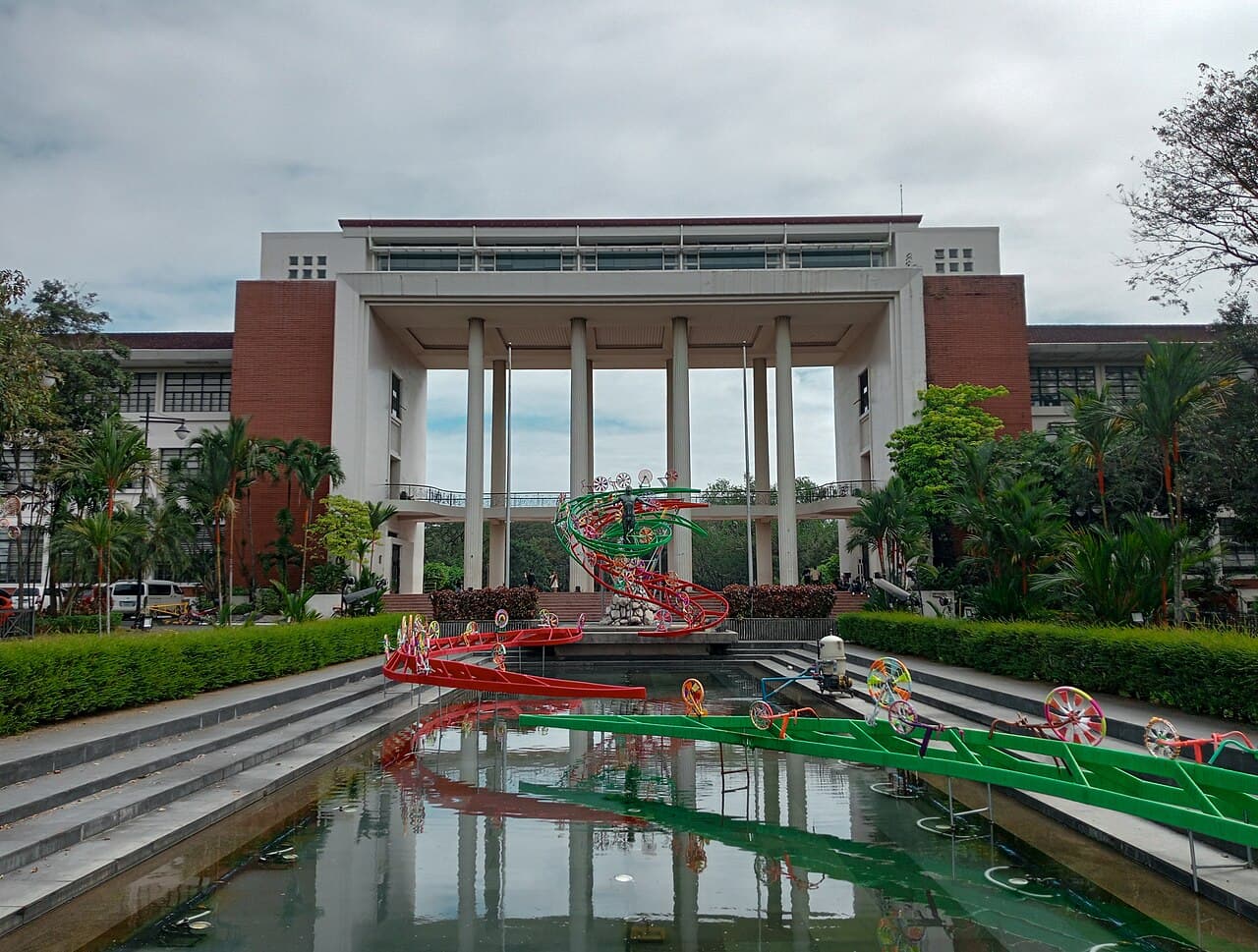
Quezon Hall, the main administration building of the University of the Philippines Diliman, seen across the reflecting pool
Photo by Ralff Nestor Nacor, CC BY-SA 4.0, via Wikimedia Commons. Not affiliated with or endorsed by the school.

The UPCAT (University of the Philippines College Admission Test) is one of the most competitive college entrance exams in the Philippines. Admission to UP is based on the University Predicted Grade (UPG), which generally combines your high school grades (40%) and your UPCAT score (60%).

Where this coverage comes from: Coverage is compiled from UP's official announcement and reports from past UPCAT takers (student discussions on Reddit and Facebook groups). Student-reported items are labeled.

Exam Format at a Glance

DetailWhat to expect
Question typeMultiple choice
SubtestsLanguage Proficiency, Reading Comprehension, Science, Mathematics
DurationA five-hour exam session
CalculatorsNot allowed (scratch paper is provided)
FilipinoIntegrated into Language Proficiency and Reading Comprehension, not a separate subtest

UPCAT Application: How to Apply

The UPCAT application is done online through the UP Office of Admissions portal. Here is how it worked for UPCAT 2027 (AY 2027-2028 first-year admission):

  1. Form 1 (you, online): Applications ran from March 3 to 30, 2026. It is not first-come, first-served, but submit before the deadline.
  2. Form 2A (your school): Your school officials confirm their students in the portal. You receive your test permit in July.
  3. Take the exam: UPCAT 2027 was held on August 1 and 2, 2026.
  4. Form 2B (you, online): After the exam, enter your Grade 8, 9, 10, and 11 grades in the portal (August 3 to 24, 2026).
  5. Submit your records: Send a certified true copy of your SF-10 or Student Permanent Record to the UP Office of Admissions in UP Diliman.

Who can apply: Current Grade 11 students expecting to graduate senior high school the following year, and Grade 12 students who have never taken the UPCAT in a previous cycle.

Dates change every cycle, so always confirm the current schedule on the official UP Office of Admissions channels before you apply. Once you have applied, practice with free UPCAT mock questions.

Mathematics

The Math subtest is mostly Algebra, but the other areas show up too, so don't skip them.

Arithmetic

  • Basic operations
  • Long division
  • Fractions

Algebra

  • Equations and inequalities
  • Sets
  • Exponents and roots
  • Linear graphs
  • Factoring
  • Quadratics
  • Functions
  • Word problems

Geometry

  • Points, lines, and planes
  • Parallel lines
  • Triangles and congruence
  • Perimeter, area, and volume
  • Theorems and deductive reasoning

Statistics and Probability

  • Counting principle
  • Permutations and combinations
  • Probability
  • Mean, median, and mode
  • Data analysis

Less common topics (student-reported)

  • Trigonometry: basic ratios and applications
  • Sequences and progressions
  • Logarithms

Science

Questions are spread fairly evenly across areas, with the focus on basic concepts and problem-solving or analysis rather than rote recall.

Earth Science

  • Earth's layers and origins
  • Rocks
  • Weather
  • Atmosphere

Astronomy

  • Solar system
  • Stars
  • Heavenly bodies and space

Biology

  • Classification
  • Evolution
  • Ecosystems
  • Genetics and heredity
  • Human anatomy

Chemistry

  • Matter
  • Physical and chemical changes
  • Measurements
  • Reactions
  • Acids and bases
  • Combustion
  • Mole concept
  • Atomic structure
  • Periodic trends
  • Thermodynamics
  • Basic organic chemistry

Physics

  • Statics and dynamics
  • Motion
  • Work, energy, and forces
  • Thermodynamics
  • Electricity

Less common topics (student-reported)

  • Waves and optics

Language Proficiency

Filipino is built into this subtest.

English

  • Vocabulary: synonyms and antonyms, spelling, correct usage
  • Grammar: parts of speech, subject-verb agreement, parallelism

Filipino

  • Bahagi ng pananalita
  • Wastong gamit
  • Pagtukoy ng mali sa pangungusap
  • Salawikain
  • Sawikain at idyoma
  • Filipino vocabulary

Reading Comprehension

The focus is on understanding, inference, and analysis, in both English and Filipino passages.

  • Context clues
  • Main idea
  • Inferences and drawing conclusions
  • Figures of speech
  • Graphs and charts

Passage types: articles, stories, poems, plays, essays, and comic strips, including Filipino reading passages and literary passages.

How to Use This Coverage

  • Master the basics first. Calculators aren't allowed, so practice arithmetic by hand and don't blindly cram.
  • Understand, don't just memorize. Know where a formula comes from, and explain science concepts to yourself in plain language.
  • Read a lot. It builds your sense of sentence construction and speeds you up on the long reading passages.

Frequently Asked Questions

Is Filipino a separate subtest on the UPCAT?

No. Filipino is built into Language Proficiency (usage, idioms, salawikain, vocabulary) and Reading Comprehension (Filipino passages). There are four subtests in total: Language Proficiency, Reading Comprehension, Science, and Mathematics.

What does the UPCAT Math cover?

Mostly Algebra, such as equations, factoring, quadratics, functions, and word problems. Arithmetic, Geometry, and Statistics and Probability also appear. Students report that trigonometry, sequences, and logarithms show up less often.

Which Science topics are on the UPCAT?

Earth Science, Astronomy, Biology, Chemistry, and Physics. Questions are spread fairly evenly across them and focus on basic concepts and analysis rather than rote recall.

What kind of passages are in UPCAT Reading Comprehension?

Articles, stories, poems, plays, essays, and comic strips, in both English and Filipino. Questions test context clues, main idea, inference, figures of speech, and reading graphs and charts.

How should I review for the UPCAT?

Master the basics by hand first, since calculators are not allowed. Understand where formulas come from instead of memorizing them, and read widely to get faster on long passages.

Ready to test yourself? Try the free UPCAT reviewer and mock exam questions.

Practice UPCAT exam questions

Try free mock questions for every UPCAT subtest, with full explanations.

Try the free questions

Ready to Start Your UPCAT Preparation?

Join thousands of students using prepPH to ace their college entrance exams. Get access to targeted flashcards, spaced repetition, and exam readiness tracking.