← All posts

Best Free CET Reviewer 2027: Tools, Websites, Practice Tests

The best free CET reviewers for 2027 compared: Gizmo, Quizlet, Anki, Khan Academy, free PDF reviewers, YouTube, and prepPH, with honest pros and cons.

Mariano Luiz King

Mariano Luiz King · PrepPH Founder

Published October 22, 2026

The University of the Philippines Diliman Main Library rising above the trees beside the Sunken Garden
Photo by Patrickroque01, CC BY-SA 4.0, via Wikimedia Commons. Not affiliated with or endorsed by the school.

There are a lot of free CET reviewers, and most of them look the same at first. This post compares the most popular free options for Philippine college entrance tests (CETs) like the UPCAT, ACET, DCAT, and USTET, with what each is good and bad at.

After reading this, you can pick one or two free reviewers that fit how you study, instead of downloading ten. Prices and free-plan limits are as of October 2026 and change often.

The short answer

If you want…Use
AI flashcards from your own notes or PDFsGizmo
Ready-made flashcards from other studentsQuizlet
The strongest free spaced repetitionAnki
To relearn math basics from zeroKhan Academy
A big pile of free practice tests and PDFs, per examFree PDF reviewers shared on Facebook (like JahJah's)
Free video lessons and worked problemsYouTube
CET-style questions per exam, built for AI follow-upsprepPH (I built it)

Most students do best with one question source plus one way to get explanations. More tools usually means less actual studying.

One warning that applies to every free option below: free shared material is usually bad. The apps are fine. The problem is the cards and PDFs other people upload into them.

1. Gizmo

Gizmo is one of the most popular AI study apps right now. You upload notes, PDFs, or other material, and it turns them into flashcards and quizzes. It adds game features like streaks and "lives."
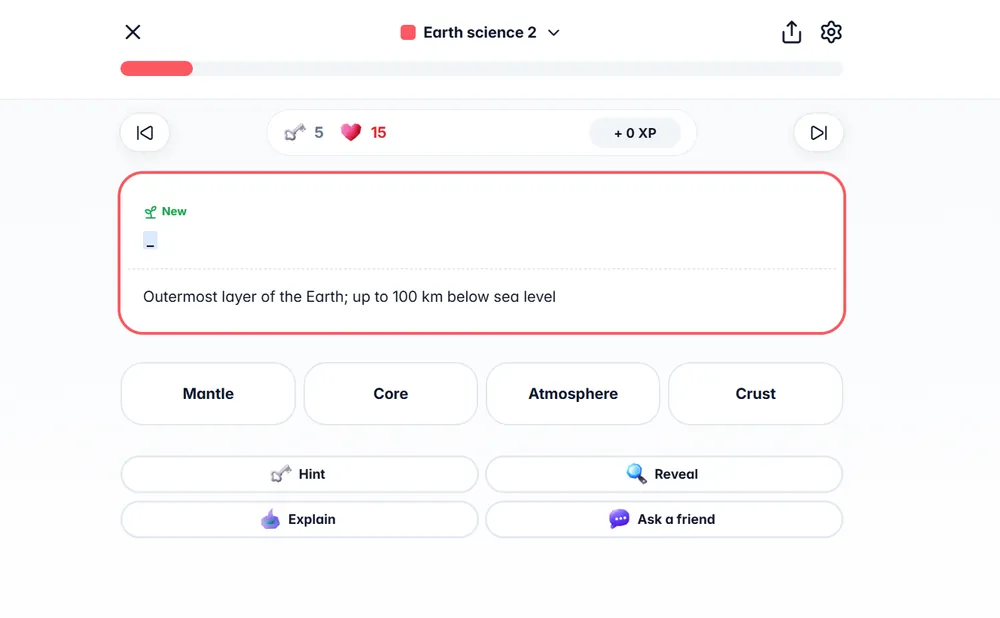
Gizmo quiz screen for an Earth science deck asking for the outermost layer of the Earth, with 5 keys and 15 hearts shown at the top

A Gizmo quiz round. The keys and hearts at the top are the free-plan limits.

Pros:

  • Very fast. You can turn a 20-page handout into cards in minutes.
  • Spaced repetition is built in, so it schedules your reviews.
  • Fun to use. The game features help some people keep a streak going.

Cons:

  • The free plan runs on hearts. When I tried it in October 2026, losing all 15 hearts stopped me until they refilled, unless I upgraded to the paid plan.
  • The cards are only as good as what you upload. If your notes don't cover a CET topic, Gizmo won't either.
  • Making cards from a reviewer PDF gives you junk cards. The AI turns everything in the file into questions, including the cover page and intro. I got cards like "What is the title of this reviewer?" and "What is the goal of this reviewer?"
  • AI-made questions can be too easy or slightly wrong. They're often recall questions ("What is X?"), not the tricky word problems CETs use.
  • It isn't built around Philippine CETs. You have to find and upload the right material yourself.

Best for: students who already have good notes or reviewer PDFs and want them turned into practice fast.

2. Quizlet

Quizlet is the classic flashcard site. Its biggest strength is the huge library of sets other students made. Search "UPCAT" and you'll find plenty.
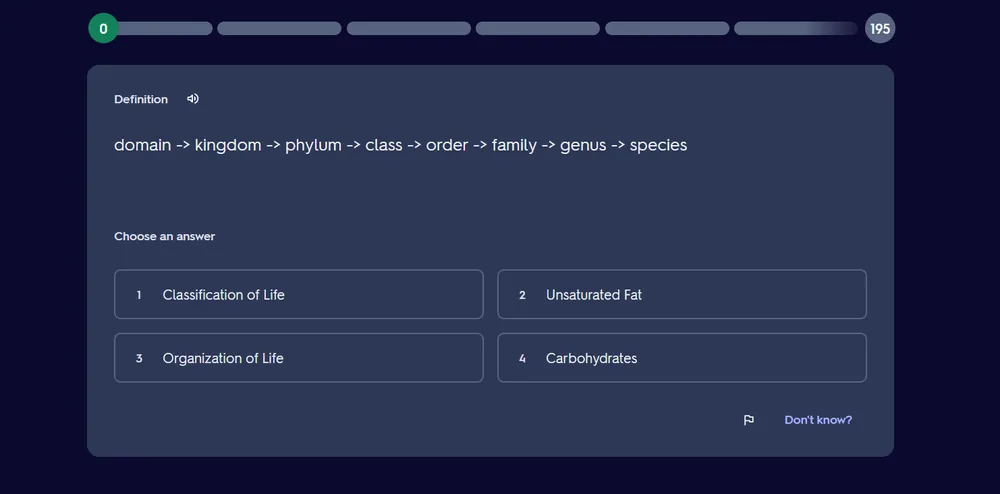
Quizlet multiple choice question showing the taxonomy order from domain to species, with four answer choices

A Quizlet multiple choice round from a user-made set.

Pros:

  • Lots of ready-made sets, so you don't start from zero.
  • Simple to use on phone and laptop.

Cons:

  • Finding a good set is hard. Most of the free sets I opened were bad: wrong answers, missing topics, or cards copied straight from a PDF with the formatting broken. Nobody checks them.
  • Flashcards are free, but Learn mode and practice tests are limited on the free plan. Even the cheaper paid plan caps you at 20 Learn rounds and 3 practice tests a month, as of October 2026.
  • Mostly vocabulary-style cards. Not great for multi-step math.

Best for: vocabulary, definitions, and General Information facts.

3. Anki

Anki is a free, open-source flashcard app with very strong spaced repetition. Medical students around the world swear by it.
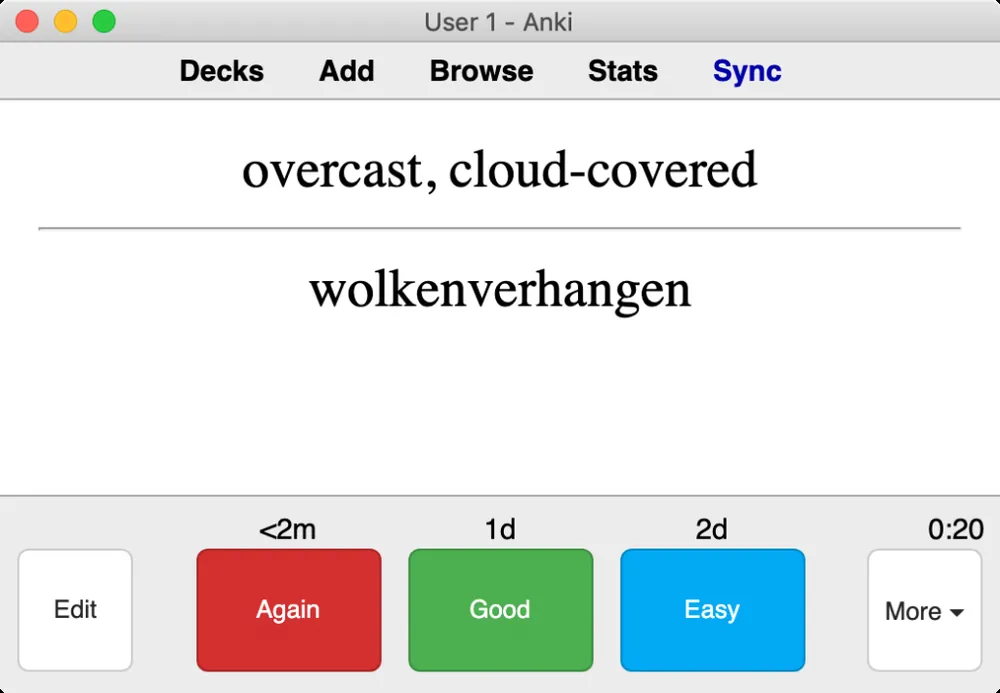
Anki review screen showing a vocabulary card with Again, Good, and Easy buttons and their next review times

An Anki review. The times above each button show when the card comes back.

Pros:

  • Free on desktop, Android, and the web. (The iPhone app is paid.)
  • The best scheduling of anything here. It's great at making you remember things long term.
  • No ads, no daily limits.

Cons:

  • Looks dated and has a learning curve.
  • You make your own cards, or find shared decks. Making cards takes a lot of time. (I know, I spent whole weekends making paper flashcards in SHS.)
  • Good shared CET decks are hard to find. Most are small, old, or badly transcribed from PDFs.

Best for: disciplined students who want long-term memory and don't mind setup.

4. Khan Academy

Khan Academy has free video lessons and practice for math, from basic arithmetic to algebra and geometry.
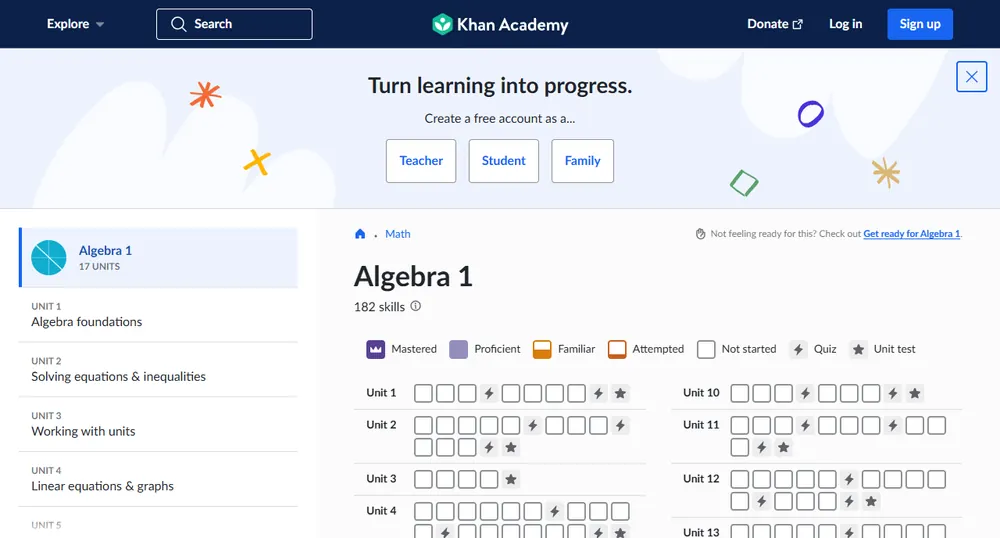
Khan Academy Algebra 1 course page listing its 17 units and 182 skills

Khan Academy's free Algebra 1 course, screenshot taken October 2026.

Pros:

  • Completely free, no ads.
  • Great if you forgot the basics. It explains from the ground up.

Cons:

  • Not made for Philippine CETs. No CET-style timing or question mix.
  • Weak for English, reading, and abstract reasoning in the CET format.

Best for: fixing gaps in math before you start CET-style practice.

5. Free PDF reviewers shared on Facebook (like JahJah's)

Every CET season, students share Google Drive folders full of reviewer PDFs in Facebook posts and groups. One of the biggest is Jahjah's Super Duper Ultra Mega CET Reviewers. It's free to view and download, no sign-in needed.
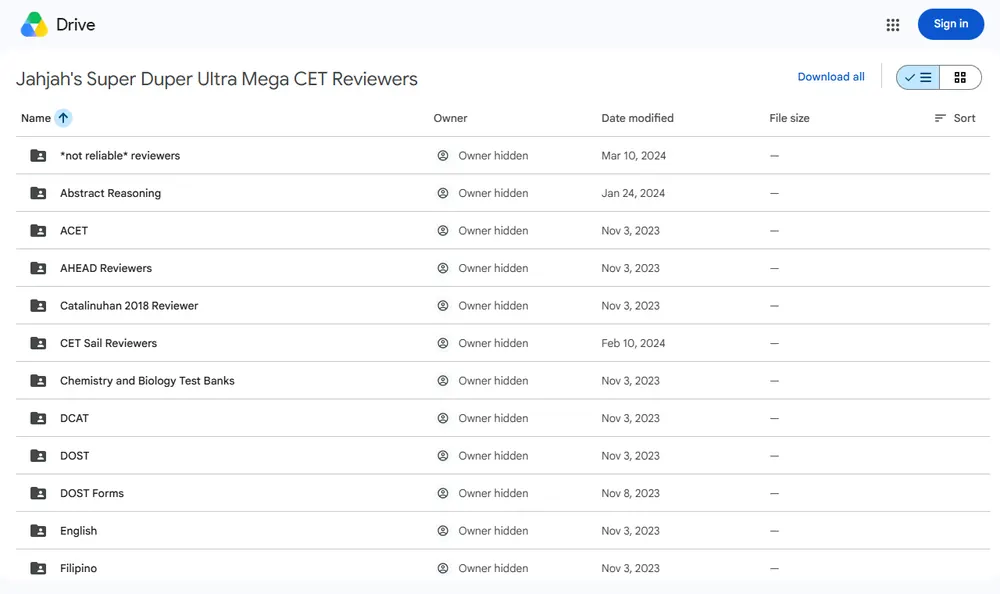
Google Drive folder "Jahjah's Super Duper Ultra Mega CET Reviewers" with subfolders like ACET, DCAT, DOST, English, and a folder named "not reliable reviewers"

Part of the JahJah Drive folder, screenshot taken October 2026.

When I opened it in October 2026, it had 22 subfolders. They're sorted by exam (ACET, DCAT, DOST, MSU SASE, PHILSCA, PMA) and by subject (Math, English, Filipino, Abstract Reasoning, General Information). There are also mock test folders.

Pros:

  • Completely free, with a "Download all" button.
  • A lot of material in one place, already sorted by exam and subject.
  • Covers exams that few other reviewers do, like DOST, MSU SASE, PHILSCA, and PMA.
  • Full mock tests, so you can practice timing on paper.
  • Honest curation: there's a folder labeled "*not reliable* reviewers," so you know which files to treat with care.

Cons:

  • Most folders were last updated in November 2023. Exam formats change, so some files may follow an old format.
  • Nobody checks the answer keys. If a PDF has a wrong key, you'll learn the wrong answer.
  • The PDFs are static. There's no spaced repetition, so nothing brings back the questions you got wrong. There's no progress tracking either, so you plan your own review and keep score yourself.
  • Some folders look like copies of paid review books (for example, "Kaplan MCAT Review"). I can't tell whether they were shared with permission.
  • It's easy to download gigabytes and never open them. Pick one folder for your exam and finish it.

Best for: free paper-style practice tests, especially for exams with few other reviewers.

6. YouTube

YouTube has free lessons, worked problems, and short practice quizzes for most CET subjects.
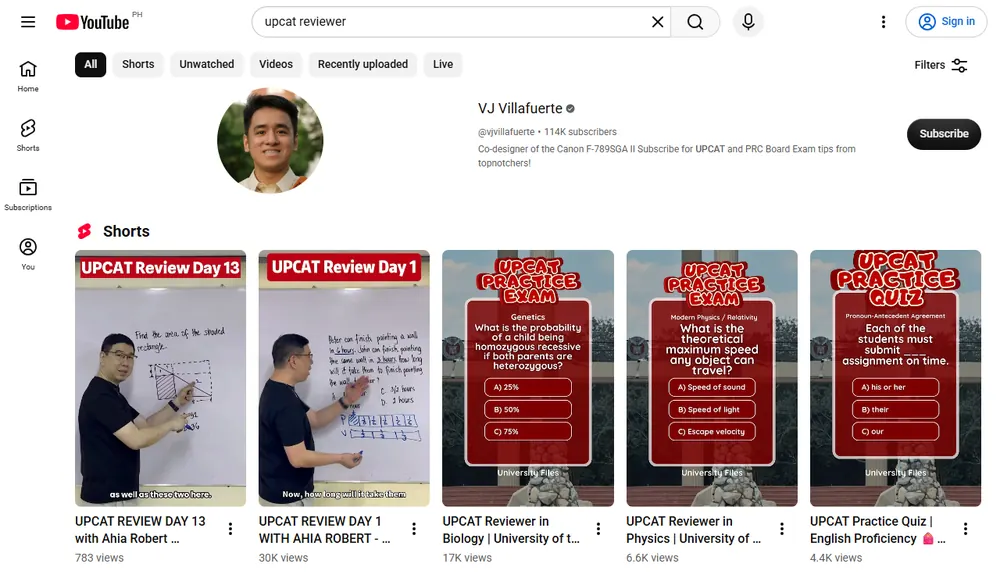
YouTube search results for "upcat reviewer" showing UPCAT review lessons and practice quiz Shorts

YouTube search for "upcat reviewer," screenshot taken October 2026.

Pros:

  • Free explanations of hard topics. Good if you learn better by watching.
  • Lots of short UPCAT practice quizzes you can do in a minute.

Cons:

  • Watching isn't practicing. You can watch 10 videos on a topic and still freeze on the exam question.
  • Quality varies, and it's easy to drift into unrelated videos.

Best for: the topic you just can't get from reading.

7. prepPH (I built this one, so I'm biased)

I've tried to be as hard on it as on the others. prepPH gives you CET-style multiple choice questions per exam, with explanations and spaced repetition. There are free reviewer pages for the UPCAT, ACET, DCAT, USTET, PLMAT, and PUPCET.
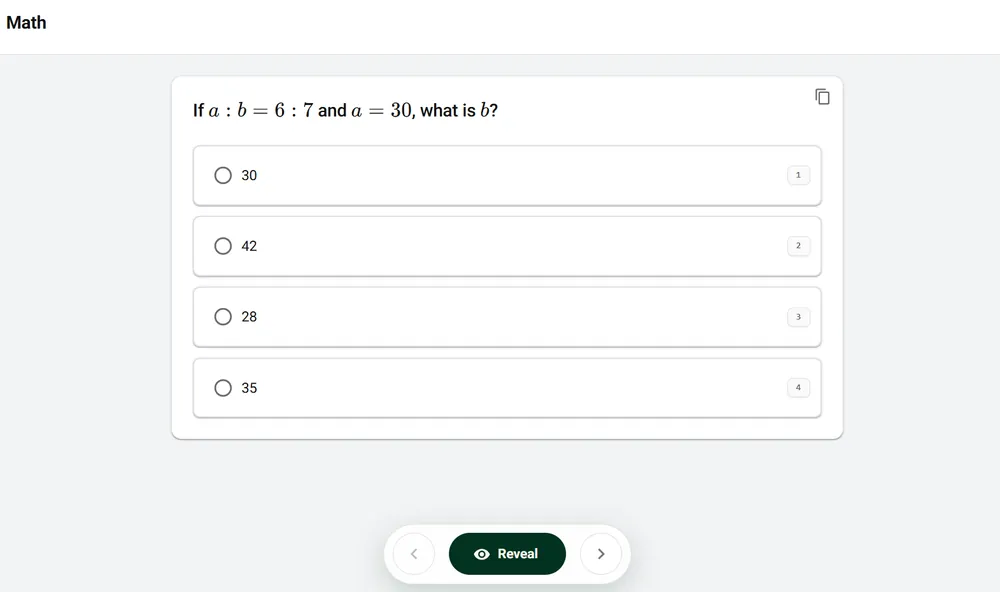
prepPH study screen showing a Math ratio question, if a:b = 6:7 and a = 30, what is b, with four choices, a copy button, and a Reveal button

A prepPH Math question. The copy button is at the top right of the card.

What makes it different: it's built to work with AI tools. Every question has a copy button that copies the subject, question, and choices in a clean format. You paste it into ChatGPT, Claude, or Gemini and ask for a step-by-step explanation, or for more questions like it.

It also tracks your progress. The dashboard shows how ready you are for each exam, plus your mastery in each subject.
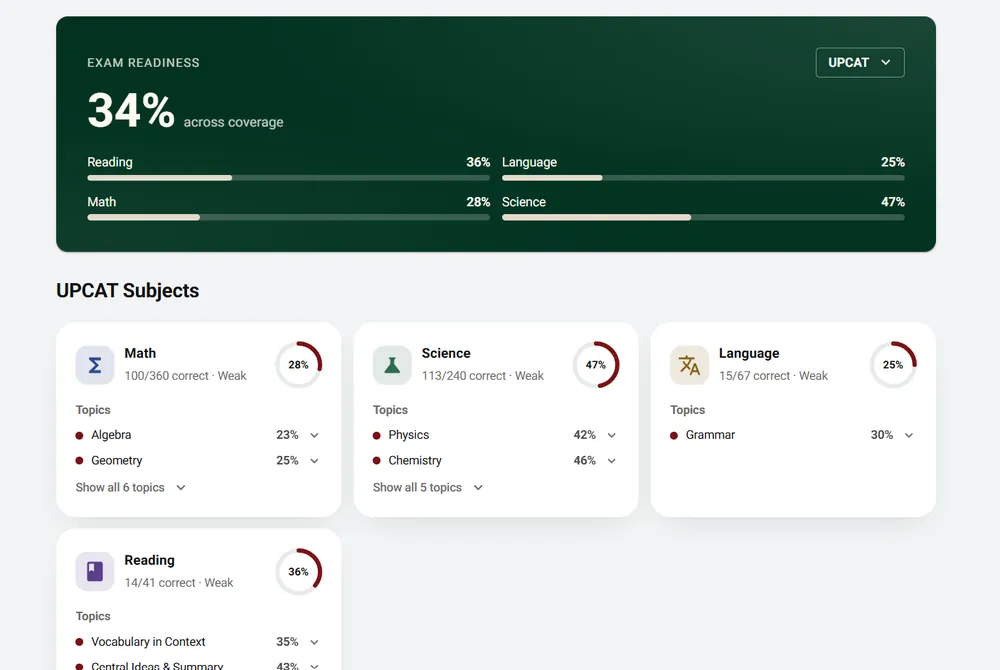
prepPH dashboard for the UPCAT showing 34% exam readiness, with Reading at 36%, Language at 25%, Math at 28%, and Science at 47%, plus topic scores under each subject

My UPCAT dashboard. The topic scores under each subject are part of the paid per-topic breakdown.

Pros:

  • Questions are organized around specific Philippine CETs, not general study.
  • Explanations are included, and you can go deeper with any AI tool in one paste.
  • Spaced repetition is on the free plan.
  • The dashboard tracks your progress for each exam and each subject, so you can see where you're weak.

Cons:

  • The free plan is 30 questions a day. That's enough for a steady daily habit, but not for long cramming sessions.
  • Topic filters and weak-topic tracking need the paid plan.
  • It only covers the CETs listed above. If your school's exam isn't there, it's less useful.
  • It's a newer tool, so the question bank is smaller than years of shared Quizlet sets.

Best for: students who want CET-specific practice and like using AI to understand mistakes.

What about printed reviewer books?

Bookstores sell CET reviewer books. They're not free, but you can often borrow one or buy secondhand. They're good if you study better on paper. Check the edition year, since exam formats change.

My verdict

If I were in Grade 12 again, I'd do this:

  1. Use one source of CET-style questions daily (prepPH, a reviewer book, or shared sets).
  2. Use an AI chat tool to explain every question I got wrong.
  3. Use Anki or Gizmo only for things I keep forgetting.
  4. Use one free PDF folder, like JahJah's, for full mock tests on paper.

No free reviewer guarantees you'll pass. What matters most is practicing consistently and learning from your mistakes.

For a full study plan, read How to Review for the CET.

Frequently Asked Questions

What's the best free reviewer for the UPCAT?

It depends on how you study. For CET-style questions, use an exam-specific reviewer. For memorizing facts, use Anki or Quizlet. For math basics, use Khan Academy.

Is Gizmo free?

Gizmo has a free plan with daily limits, and a paid plan that removes them. Check the app for current limits, since they change.

Are reviewer PDFs from Facebook groups reliable?

Some are good, some have wrong answers. Use them for practice, but double-check answer keys, and be careful with anything called "leaked."

Sources

Ready to Start Your free Preparation?

Join thousands of students using prepPH to ace their college entrance exams. Get access to targeted flashcards, spaced repetition, and exam readiness tracking.